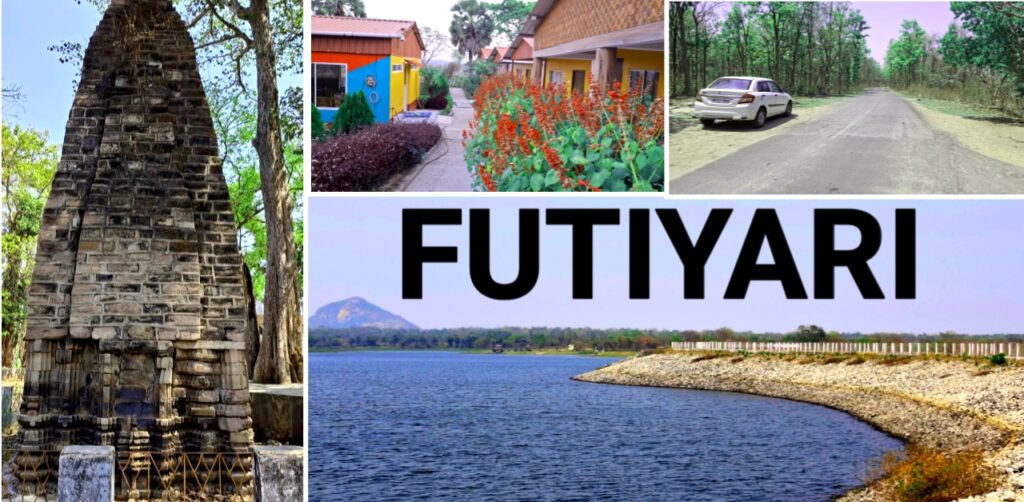
If you are looking for a charming and genuinely unique weekend getaway in West Bengal, congratulations! You have found the perfect blog. I’m sharing my experiences about a relatively new destination. Yes, Futiyari Dam, a hidden gem of Purulia. Let’s get started; grab a cup of coffee, sit back, and enjoy the ride with me.
Overview-My thought
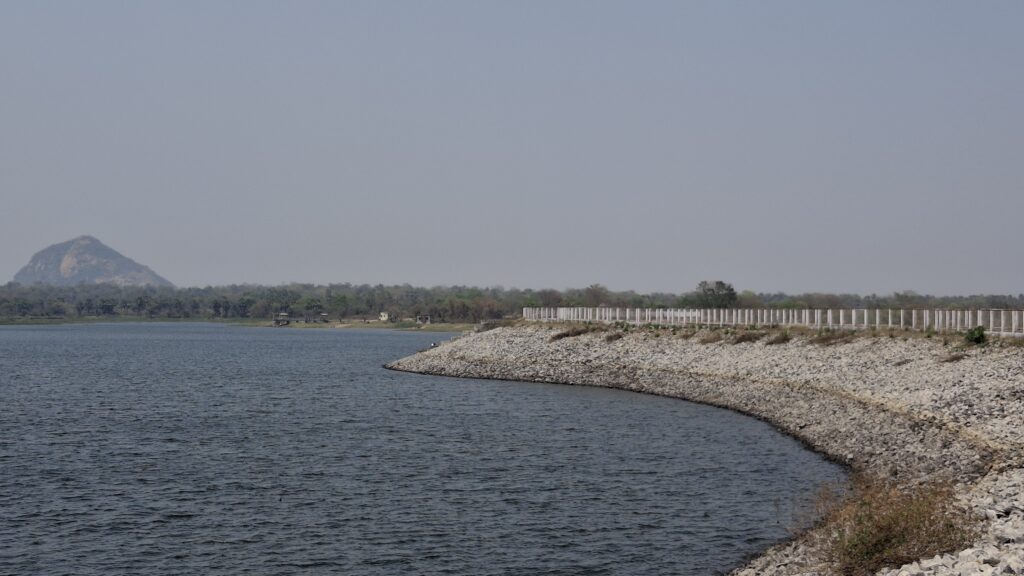
I have visited Futiyari Dam a few times, which is situated in the Purulia district. The entire Futiyari environment is a delight for visitors. I can guarantee that you will enjoy strolling along the Futiyari dam with a special person by your side. The stunning and enchanting views during sunrise and sunset will enhance your experience. The name Futiyari is derived from the river Futiyari that flows through this area of Purulia. This river has formed a remarkably picturesque dam, which contributes to the vibrant and untamed beauty of Futiyari. Despite its charm, the location remains relatively undiscovered, with only a small number of tourists being aware of Futiyari. In addition to the dam, there are several lovely spots nearby that will make your trip even more enjoyable. To begin with, here is a detailed itinerary for your visit.
Ideal two-night, three-day travel plan
Day-1
Adra railway station is the ideal place to begin your journey. Now, how can you conveniently get to Adra? I will discuss that shortly. From Adra station, take the car you arranged in advance (your hotel or resort will handle all arrangements) to reach Futiyari Dam. On your way, appreciate the heritage site of Kashipur’s zamindar bari or rajbari. Normally, visitors cannot go inside, but during Durga Puja, the zamindar bari opens its doors to guests. After exploring the Rajbari, proceed to your pre-booked resort. After lunch, relax and stroll around Futiyari Dam in the evening. Treat yourself to the stunning sunset view. After the sun goes down, you can enjoy evening snacks with tea. Use your free time to wander about. In this countryside setting, dinner is offered early. Surrounded by nature, enjoying a delightful dinner is simply incredible, a feeling that words cannot capture.
A Brief History of Kashipur Zamindar Bari
The Panchkot Raj governed from their center at Garh Panchkot between 940 and 1750 AD. Nevertheless, they encountered challenges towards the conclusion of their rule in Garh Panchkot. Around the year 1600 AD, the Bargi invasions devastated the region. By approximately 1750 AD, the Panchkot Raj family relocated to Kashipur, where they have remained ever since.
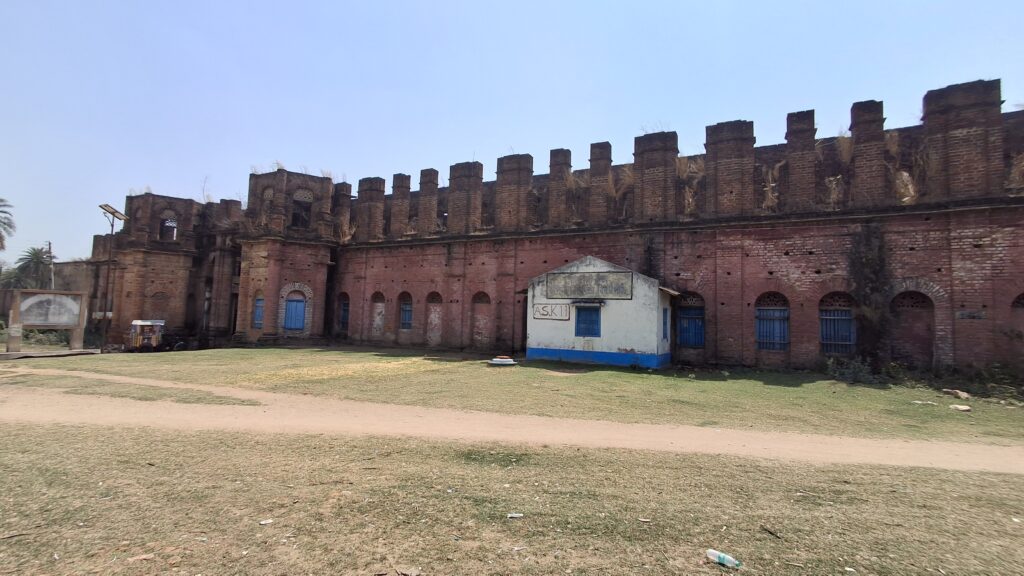
The Panchkot Jagir, sometimes referred to as the Zamindari Raj of Panchkot or Chakla Panchkot, was established around 80 AD by Damodar Shekhar, who was part of the Kudmi Community. Among the more recent leaders was Raja Bahadur Jyoti Prasad Singh Deo, who reigned from 1901 to 1938 and received the title of Raja in 1912 as a special honor. Following him, Raja Kalyani Prasad Singh Deo led from 1938 to 1945, Raja Shankari Prasad Singh Deo governed from 1945 to 1956, and Raja Bhubaneswari Prasad Singh Deo was in charge from 1956 to 1972.
Day-2
It’s nice to begin your day early; you might consider taking a stroll around the dam and observing the fishing activities. In other words, savor the authentic rural lifestyle. From the side of the dam, or even from any resort adjacent to it, you can clearly see Tilaboni hill. After you’ve had breakfast, set off for Pakbira (Pakbirra). There’s no need to worry about transportation; the resort where you are staying will take care of that. Pakbirra is located only 45 kilometers from Futiyari, and the trip will take a little over an hour. Don’t miss the chance to explore the ancient Jain temples and structures. This location has a unique atmosphere all its own. After visiting the Pakbira Jain Temple, the driver will take you to Keshargarh Jungle, known for its Mahua flower (Madhuca longifolia). This flower is a key component for preparing a unique beverage enjoyed by the tribal people. If luck is on your side, you might encounter some tribal men and women and learn about their traditions and the methods they use to cultivate Mahua. Deep in the jungle, close to the Hura area, there is an open temple recognized as Rakab Buri. This temple is traditionally dedicated to a goddess revered by the tribal group. Those who wish to pray or fulfill a desire can offer a terracotta horse. Rakab Buri holds significant spiritual value and is a source of pride for the tribal community. As a result, you will see a heap of these sacrificed clay horses behind the temple. Once you finish at Rakab Buri, it’s time to head to Tilaboni Hill.
Pakbirra Jain Temples
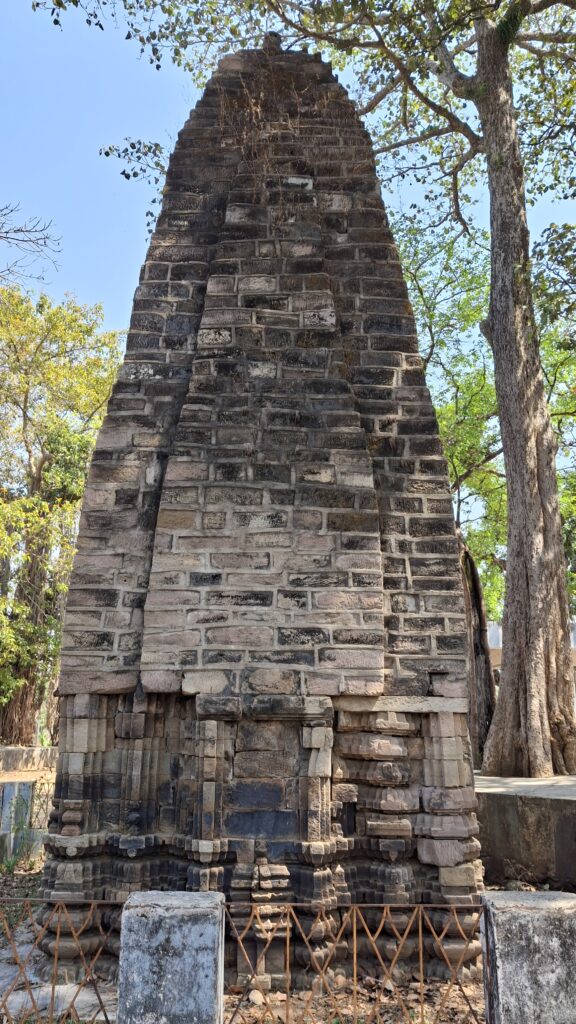
The Pakbirra Jain Temples located in Purulia, West Bengal, hold great archaeological significance from the 9th to 12th centuries. This area was formerly a vibrant center for Jainism, boasting 24 temples, referred to as deuls, honoring Tirthankaras. The remnants found here indicate that Jain culture thrived in conjunction with neighboring societies. While many temples and idols have been lost or altered, three stone temples still stand, accompanied by massive black stone sculptures, such as Padmaprabha. These monuments are now safeguarded and continue to reflect the area’s deep Jain heritage, with active measures being taken to maintain these important historical sites.
After visiting the Pakbira Jain Temple, the driver will take you to Keshargarh Jungle, known for its Mahua flower (Madhuca longifolia). This flower is a key component for preparing a unique beverage enjoyed by the tribal people. If luck is on your side, you might encounter some tribal men and women and learn about their traditions and the methods they use to cultivate Mahua. Deep in the jungle, close to the Hura area, there is an open temple recognized as Rakab Buri. This temple is traditionally dedicated to a goddess revered by the tribal group. Those who wish to pray or fulfill a desire can offer earthen horses that have been fired. As a result, you will see a heap of these sacrificed clay horses behind the temple. Rakab Buri holds significant spiritual value and is a source of pride for the tribal community. Once you finish at Rakab Buri, it’s time to head to Tilaboni Hill.
On the journey, there are two additional small elevations: Sindurpur Hill and Panjaniya Hill (also known as Panjonia Hill). This region is famous for its stunning scenery and attracts many visitors. However, the most striking and tallest elevation is Tilaboni. (As I mentioned before, Tilaboni Hill can also be seen from the resort side. ) The landscape is characterized by granite rock formations, making this area feel like paradise. Large stones precariously balance on top of each other, leading some to describe it as a magical rocky landscape. One can hike up Tilaboni Hill, but the trek can be challenging and requires some skill. From the summit of Tilaboni, you can see another hill, Joychandi, located in Purulia. After your visit, head back to the resort for lunch. On the return journey, you have a chance to cover the road that is built on the entire Futiyari Dam. It’s just magical. You can explore all these sights on Day 2 within a span of five hours. The rest of the day is yours to enjoy to the fullest. If requested and with a small additional fee, the resorts offer a bonfire and traditional dancing at night. One more detail I neglected to mention earlier is that all the resorts near Futiyari Dam aim to prepare meals for their guests using ingredients they grow themselves. The quality of the food is exceptional.
Day-3
It’s time to check out Futiyari.. Should you have the opportunity to prolong your trip, visiting the surrounding areas of Purulia, such as Joychandi Hill, Baranti, and Garpanchkot, becomes quite simple.
Where to stay in Futiyari
I spent time at Futiyari Retreat. The contact number: 9051166563
Driver’s contact: 9635480117
Additional accommodation choices:
Palas Baha Resort, Contact number: 96793 45038
Ahalya Bhumi Resort: 6295167916
(For any package inquiries, feel free to reach out to the numbers listed)
How to reach Futiyari Dam
By car: The journey from Kolkata to Futiyari covers roughly 280 km. Depending on the condition of the roads, the travel time may exceed 6 hours.
By rail: Departing from Kolkata, board any train that stops at Adra station (Station code ADRA). From Adra, the Futiyari retreat is just 23 kilometers away. If you’re traveling from Purulia, the Futiyari dam is a mere 17 kilometers distant.
Best time to visit
Avoid the summer period. October/September to March is the best time.
Disclaimer
The content provided on this blog serves only as general information and should not be considered as professional guidance. Any steps you take, such as traveling, wellness recommendations, fitness suggestions, or treatments, based on the details available on this site, are entirely at your own risk. For further information, please check the Disclaimer page.