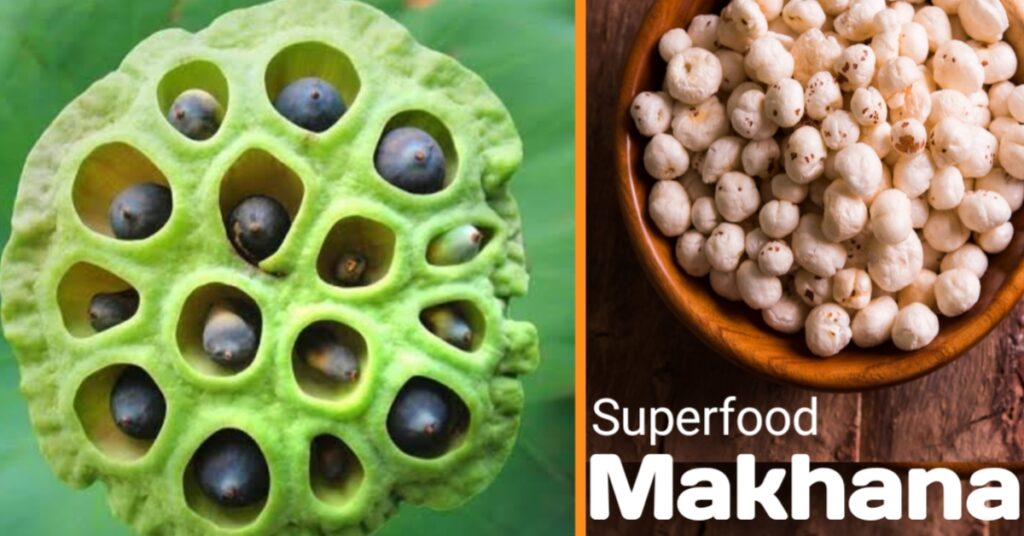
Do you enjoy popcorn? If your answer is yes! Then I guarantee you will adore snacking on a small dish of Makhana, an excellent alternative to popcorn. This alternative is considered a superfood, and you will be amazed to discover some fantastic health benefits of Makhana.
What is Makhana? You should know before reading
Makhana is derived from lotus seeds and is commonly referred to as fox nuts. The region of Bihar in India is responsible for over 90% of the world’s total output. Currently, West Bengal and Odisha are also entering this industry. The lotus plant requires still water that is at least 4 to 5 meters deep. The presence of stagnant water makes the soil overly muddy. These wet and muddy conditions are ideal for the growth of lotus plants. Lotus plants require around 3 to 4 months to reach full maturity. Collecting fully matured lotus seeds from the bottom of the water can be somewhat challenging. Let me summarize the entire process of making makhana.
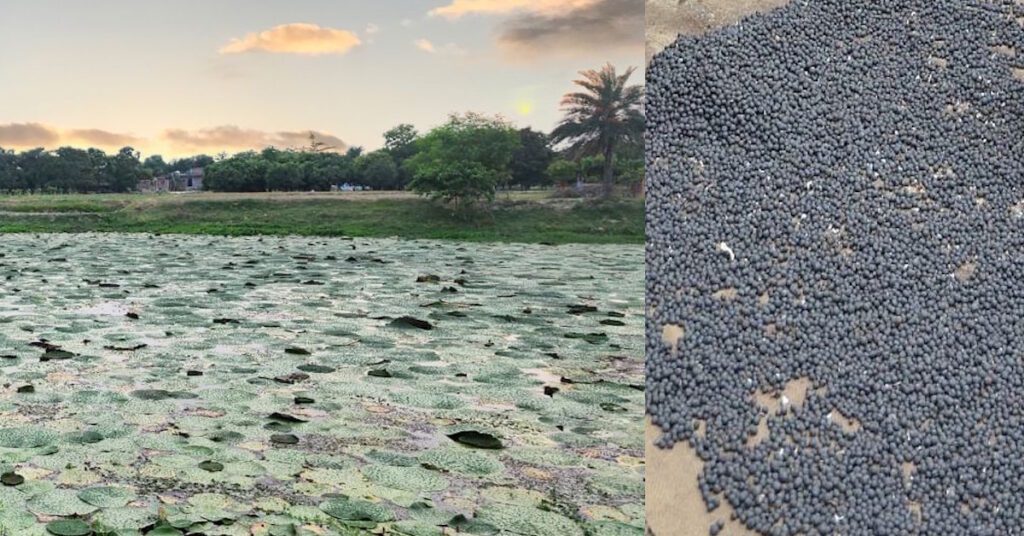
Makhana processing
There are typically three stages in making edible Makahan.
- Collecting: Experienced workers gather seeds from the aquatic lotus plant in still waters.
- Dehydrating and Roasting: The seeds are dehydrated and subsequently roasted in large pans over high temperatures.
- Popping: When heated, the seeds swell and burst, but their tough outer shell usually needs a trained person to gently strike them with a wooden mallet to completely free the fluffy white kernel within.
Health benefits of Makhana seeds
Provides essential nutrients
Let me provide the following table of the nutrition profile of the Makhan seeds. For every 100 grams of Makhana
| Energy | 360-400 kcal |
| Fat | Very low (only 0.5 gram) |
| Protein | Above 10 grams |
| Carbohydrate | 80 grams |
| Magnesium | 90 milligrams |
| Potasium | 510 miligrams |
| Calcium | 510 milligrams |
| Iron | 510 milligrams |
| 1.8 milligrams | 15 grams |
The above table concludes that the Makhana is equivalent to a food that has low-fat + good protein + high fiber. Therefore, eating Makhana is extremely beneficial for health.
Controls diabetes effectively
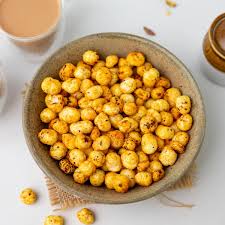
The glycemic index of Makhana is low, indicating that even consuming a bowl of roasted Makhana will not cause a significant rise in blood sugar. Additionally, its high fiber content aids in delaying the absorption of any remaining sugar. If you have diabetes, you can confidently snack on roasted Makhana when you have a small craving. But don’t take any oil-fried or sugar-coated preparation.
A sure candidate for weight loss aim
Consider adding makhana to your salad. The fiber found in makhana aids in promoting a sense of fullness. As a result, it helps to curb excessive eating or constant snacking.
Prevents constipation
Makhana seeds possess mild laxative qualities. Laxatives are agents that relieve constipation by softening stools, increasing stool bulk, or stimulating intestinal activity. Additionally, Makhana supports the development of beneficial bacteria in the digestive system.
Makhan is heart-friendly
A diet low in cholesterol, fats, and sodium is beneficial for cardiovascular wellness. Makhan is an ideal choice for this purpose. Additionally, Makhana provides a good level of magnesium. Thus, consuming Makhan certainly enhances heart health.
Promotes reproductive health
Makhana aids in balancing hormones such as progesterone and estrogen, which can enhance menstrual wellness and alleviate PMS and menopausal symptoms. It is considered a nutritious food that provides essential nutrients to the uterus and ovaries.
FAQs
Which is the best time to eat Makhana?
Any time you feel hungry, you can eat.
How much quantity is safe?
50 grams per day is safe.
What about Kedney patients?
The high potassium content of Makhana is a concern. Consult your health provider for more specific guidance.
Is it safe for pregnant women?
It is safe to take Makhana in food amounts during pregnancy. However, it is advised to consult your doctor before taking Makhana.
Best way to eat?
Roasted Makhana is best. Roast one cup of Makhana for 5 to 20 minutes on a low flame.
The content provided on this blog serves only as general information and should not be considered as professional guidance. Any steps you take, such as traveling, wellness recommendations, fitness suggestions, or treatments, based on the details available on this site, are entirely at your own risk. For further information, please check the Disclaimer page.